Karate Belts in Order: Complete Guide to Every Rank and Colour

Karate belts in order follow a progression from white to black, and knowing that progression matters whether you’re a parent signing your child up for their first class or an adult walking into a dojo for the first time. At Bushido, we’ve been supplying dojos across Canada with karate belts and karate gi for over 30 years, so we’ve seen thousands of students work their way through every rank. This guide breaks down the full karate belt order, what each colour means, how long each rank takes, and how the progression differs across karate styles.
The Standard Karate Belt Order
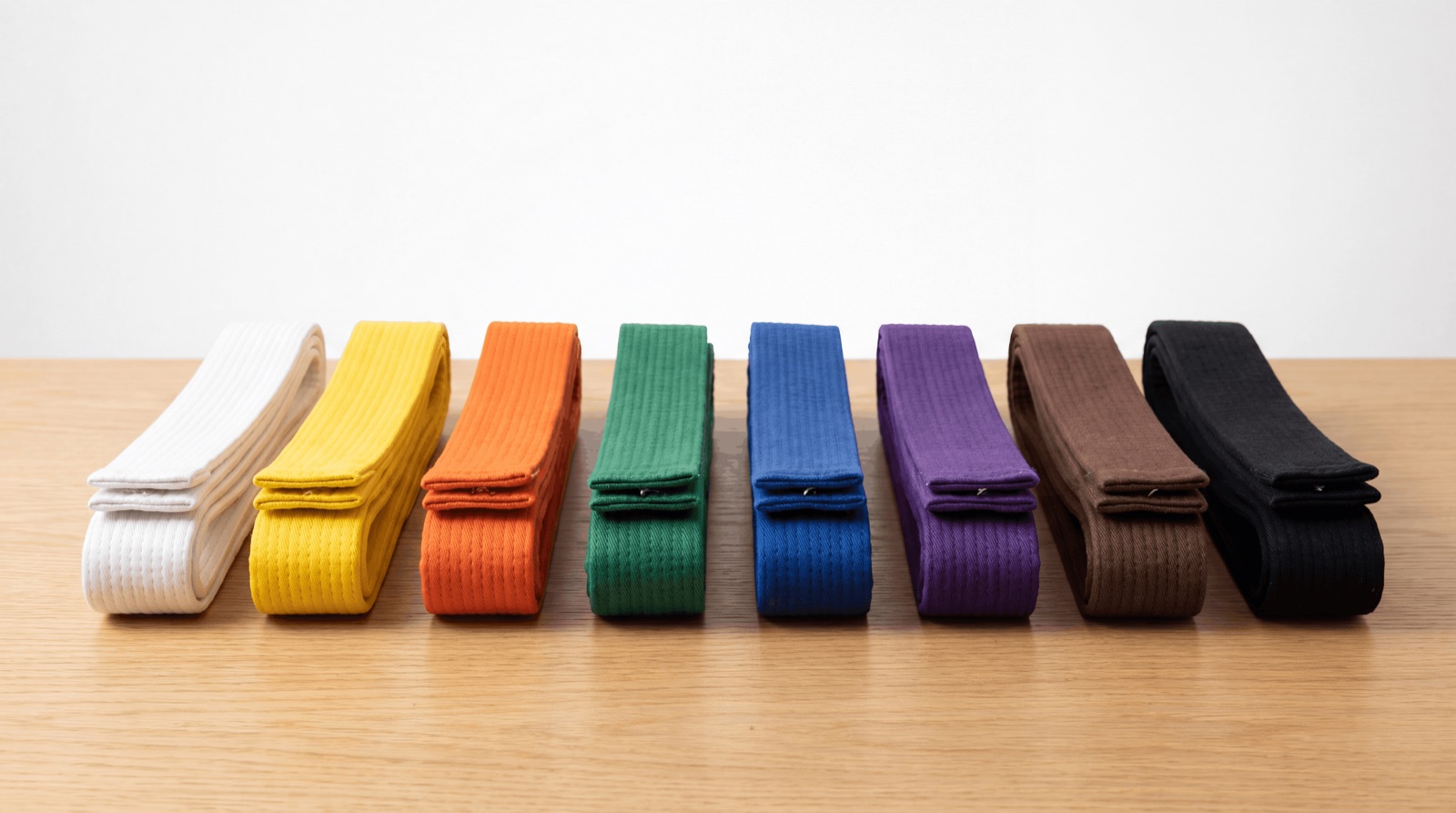
The most common karate belts in order follow this progression from beginner to advanced:
- White Belt (10th Kyu): the starting rank for all beginners.
- Yellow Belt (9th Kyu): introduction to basic stances, blocks, and strikes.
- Orange Belt (8th Kyu): building foundational techniques and first kata.
- Green Belt (7th Kyu): intermediate techniques and improved control.
- Blue Belt (6th Kyu): refinement of combinations and sparring introduction.
- Purple Belt (5th Kyu): advanced techniques and deeper kata understanding.
- Brown Belt (3rd to 1st Kyu): high proficiency, often split into three sub-ranks.
- Black Belt (1st Dan and above): mastery of fundamentals and the beginning of advanced study.
This order applies to most traditional karate schools, including Shotokan, the most practiced karate style worldwide. Some dojos add colours like red or gold between these ranks, and some skip certain colours entirely. The specifics depend on the style and the organization your school belongs to.
What Each Karate Belt Colour Symbolizes
Each belt colour represents a stage of growth in the karate belt ranking system. The traditional symbolism ties to nature, with the idea that a student grows like a seed planted in soil.
| Belt Colour | Kyu Rank | Symbolism |
|---|---|---|
| White | 10th Kyu | A blank slate, purity, the beginning of the journey |
| Yellow | 9th Kyu | The first rays of sunlight. Awareness is growing |
| Orange | 8th Kyu | The sun grows stronger. Skills are developing |
| Green | 7th Kyu | A plant sprouting. Techniques are taking root |
| Blue | 6th Kyu | The sky above. The student reaches higher |
| Purple | 5th Kyu | Dawn turning to dusk. Deeper understanding |
| Brown | 3rd to 1st Kyu | Maturity, like a ripe seed ready to be planted |
| Black | 1st Dan and above | Mastery of basics. The real learning begins |
This symbolism comes from the World Karate Federation (WKF) tradition, though the exact interpretation varies between dojos. A black belt doesn’t mean you’ve learned everything. It means you’ve built a strong enough foundation to start learning the deeper aspects of karate.
How Long Does Each Karate Belt Take?
One of the most common questions we hear from parents and new students is how long the whole process takes. Here’s a realistic breakdown for the karate belt order timeline:
| Belt Transition | Average Time | Cumulative from White |
|---|---|---|
| White to Yellow | 3 to 4 months | 3 to 4 months |
| Yellow to Orange | 3 to 4 months | 6 to 8 months |
| Orange to Green | 4 to 6 months | 10 to 14 months |
| Green to Blue | 4 to 6 months | 14 to 20 months |
| Blue to Purple | 6 to 8 months | 20 to 28 months |
| Purple to Brown | 6 to 8 months | 26 to 36 months |
| Brown to Black | 12 to 18 months | 3 to 5 years total |
These timelines assume training 2 to 3 times per week. Training once a week will stretch the timeline significantly. Most Canadian dojos require a minimum time in grade before testing, so you can’t simply test early even if you feel ready.
Children typically take longer because grading criteria scale with age. Many schools use striped belts to create more frequent milestones for younger students, keeping them motivated between major belt promotions.
Karate Belt Order by Style
Not every karate style uses the same belt progression. Here’s how the three most popular styles compare in their karate belt ranking systems:
| Rank | Shotokan | Goju-Ryu | Wado-Ryu |
|---|---|---|---|
| 10th Kyu | White | White | White |
| 9th Kyu | Yellow | Yellow | White w/ stripe |
| 8th Kyu | Orange | Orange | Yellow |
| 7th Kyu | Green | Green | Orange |
| 6th Kyu | Blue | Blue | Green |
| 5th Kyu | Purple | Blue w/ stripe | Blue |
| 4th Kyu | Purple w/ stripe | Brown | Purple |
| 3rd Kyu | Brown | Brown | Brown |
| 2nd Kyu | Brown w/ stripe | Brown w/ stripe | Brown w/ stripe |
| 1st Kyu | Brown (high) | Brown (high) | Brown (high) |
| Shodan | Black | Black | Black |
Shotokan is the most standardized because organizations like the Japan Karate Association (JKA) maintain consistent grading worldwide. Goju-Ryu and Wado-Ryu schools have more local variation.
If you train at a dojo affiliated with Karate Canada, the belt order will generally follow the Shotokan or Goju-Ryu pattern, but your specific school’s syllabus is the final authority.
What Equipment You Need at Each Belt Level
Your gear requirements change as you progress through the karate belt levels. Here’s what most dojos expect:
White to Orange Belt (Beginner)
- A karate gi. A lightweight student gi is fine at this stage. Bushido’s entry-level gi starts around $60 and handles everything a beginner needs.
- Your belt, included with most gi purchases, or buy a Drako Regular Belt separately for $8.95.
- A mouthguard for sparring classes (some dojos require this from day one).
Green to Purple Belt (Intermediate)
- A mid-weight gi, since you’re training harder and a lightweight gi wears out faster at this stage.
- Sparring gloves. WKF-approved gloves are required for sanctioned sparring, but for club use only, Drako Karate Mitts with a thumb are a great choice.
- Shin guards and foot protectors for full-contact kumite.
- A chest protector, especially for women and junior competitors.
Brown to Black Belt (Advanced)
- A heavyweight gi is a solid choice for serious practitioners.
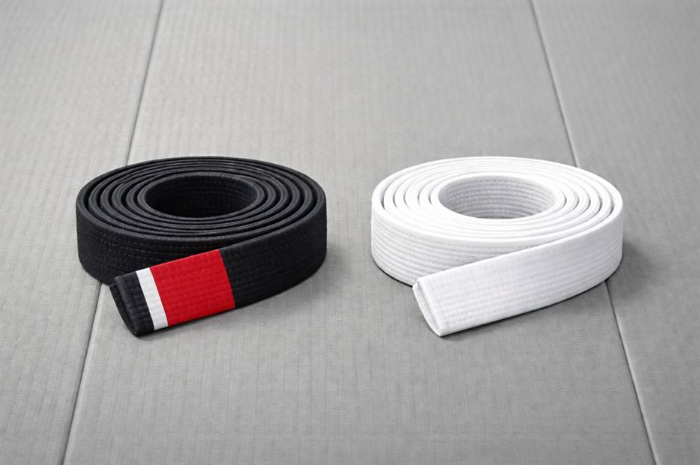
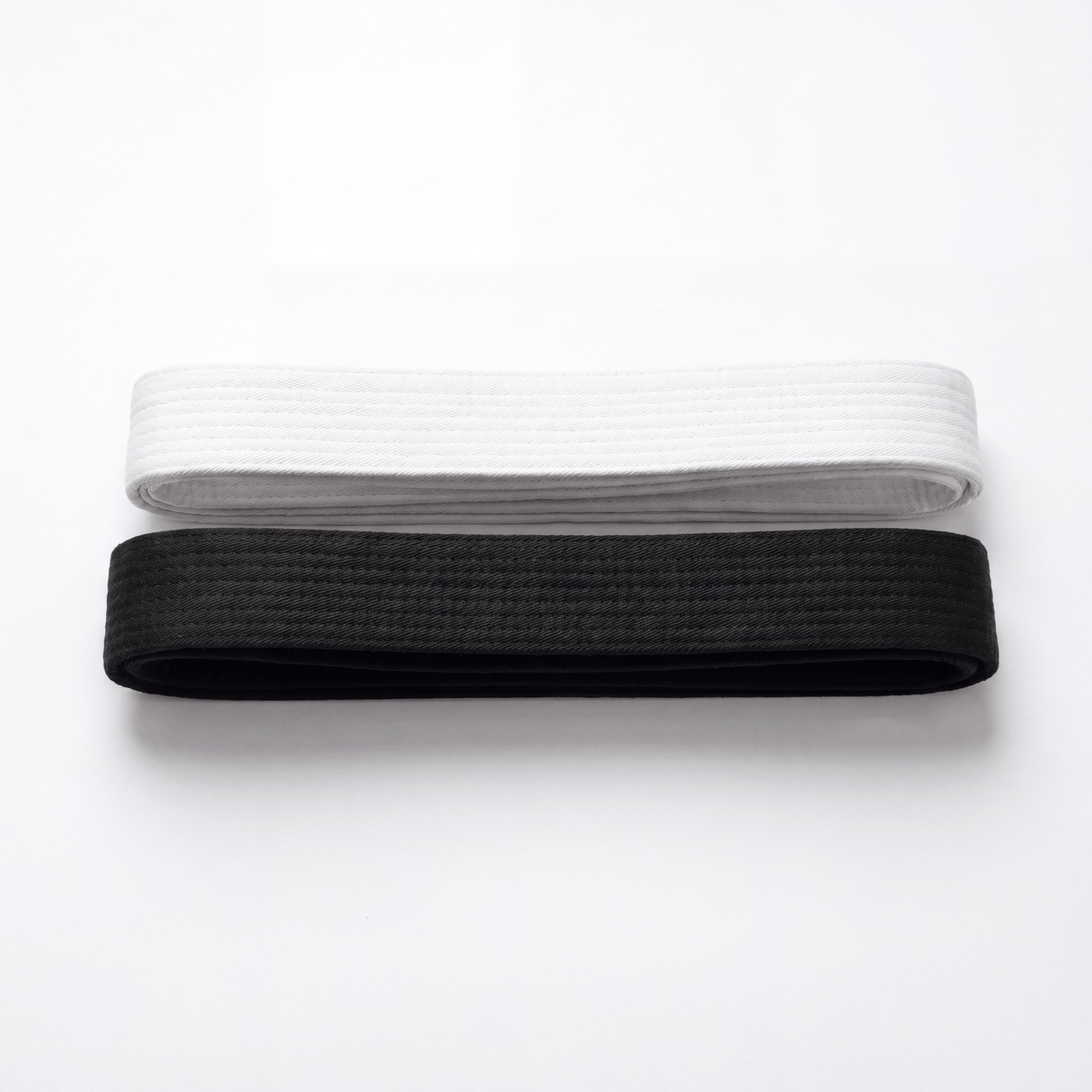
- A quality black belt: the Daedo Black Belt 5cm ($29.90) or Drako 2inch Black Belt ($15.95). Your black belt is something you’ll keep for years, so invest in quality.
- Competition-grade sparring equipment if you compete at the provincial or national level.
Kids vs Adult Karate Belt Progression
Most schools use the same basic karate belt order for kids and adults, but with more steps in between. Schools add colour stripe belts, like a white belt with a yellow stripe, or a yellow belt with a green stripe, to create smaller and more achievable goals for younger students.
At Bushido, we carry Drako Colour Stripe Belts ($9.95) in every combination your dojo might use: white with yellow stripe, yellow with green stripe, green with blue stripe, and more. Camo belts ($11.95) are also popular with kids, as they’re earned alongside standard colours at some schools as a fun milestone.
Dan Ranks: What Happens After Black Belt
Earning a black belt isn’t the end. It’s the start of the Dan ranking system. The Dan ranks work in reverse from the Kyu system: 1st Dan is the starting black belt rank, and the numbers go up from there.
| Dan Rank | Title | Typical Time to Earn |
|---|---|---|
| 1st Dan (Shodan) | Black Belt | 3 to 5 years from white |
| 2nd Dan (Nidan) | 2 or more years after Shodan | |
| 3rd Dan (Sandan) | 3 or more years after Nidan | |
| 4th Dan (Yondan) | 4 or more years after Sandan | |
| 5th Dan (Godan) | Master | 5 or more years after Yondan |
| 6th to 8th Dan | Awarded for contributions | |
| 9th to 10th Dan | Grandmaster | Extremely rare, usually honorary |
Most practitioners spend their entire career between 1st and 4th Dan. 5th Dan and above typically requires decades of teaching, competition, and contribution to the art. 10th Dan is the highest rank in karate, and fewer than a handful of living practitioners hold it in any given style.
If you’re curious about how karate ranking compares to other martial arts, we covered that in our post on the differences between Jiu-Jitsu and karate belts.
Frequently Asked Questions
What are the karate belts in order?
The standard karate belt order is white, yellow, orange, green, blue, purple, brown, and black. Some styles include additional colours like red, gold, or striped variations between these ranks. The exact progression depends on your dojo and the karate style you practice.
How long does it take to get each karate belt?
Each belt typically takes 3 to 8 months of regular training (2 to 3 sessions per week). White to yellow is usually the fastest at 3 to 4 months, while brown to black takes the longest at 12 to 18 months. The total journey from white to black belt averages 3 to 5 years.
What are the 9 belts in karate?
The nine most common belt colours in karate are white, yellow, orange, green, blue, purple, and then three levels of brown (3rd, 2nd, and 1st Kyu), followed by black. Some schools count all three brown belt sub-ranks as one, making it eight belts total. Others add red or gold to reach nine or more distinct colours.
Is a red belt higher than a black belt in karate?
In some karate styles, yes. A red belt (or red and white alternating belt) signifies 9th or 10th Dan, the highest rank achievable. This tradition comes from judo’s influence on karate’s ranking system. Not all styles use red belts, and when they do, it’s reserved for grandmasters with 40 or more years of training.
What belt is Chuck Norris in karate?
Chuck Norris holds an 8th-degree black belt in Tang Soo Do (a Korean martial art often grouped with karate) and has earned high-ranking black belts in several other martial arts. He was one of the first westerners to earn a black belt in Tang Soo Do.
Find Your Next Belt at Bushido
Whether you’re tying on your first white belt or upgrading to a quality black belt for your Shodan grading, we carry every colour and style you’ll need along the way. Browse our full selection of karate belts and karate gi, or call us at 604-513-0317 if you need help choosing the right gear for your rank.